
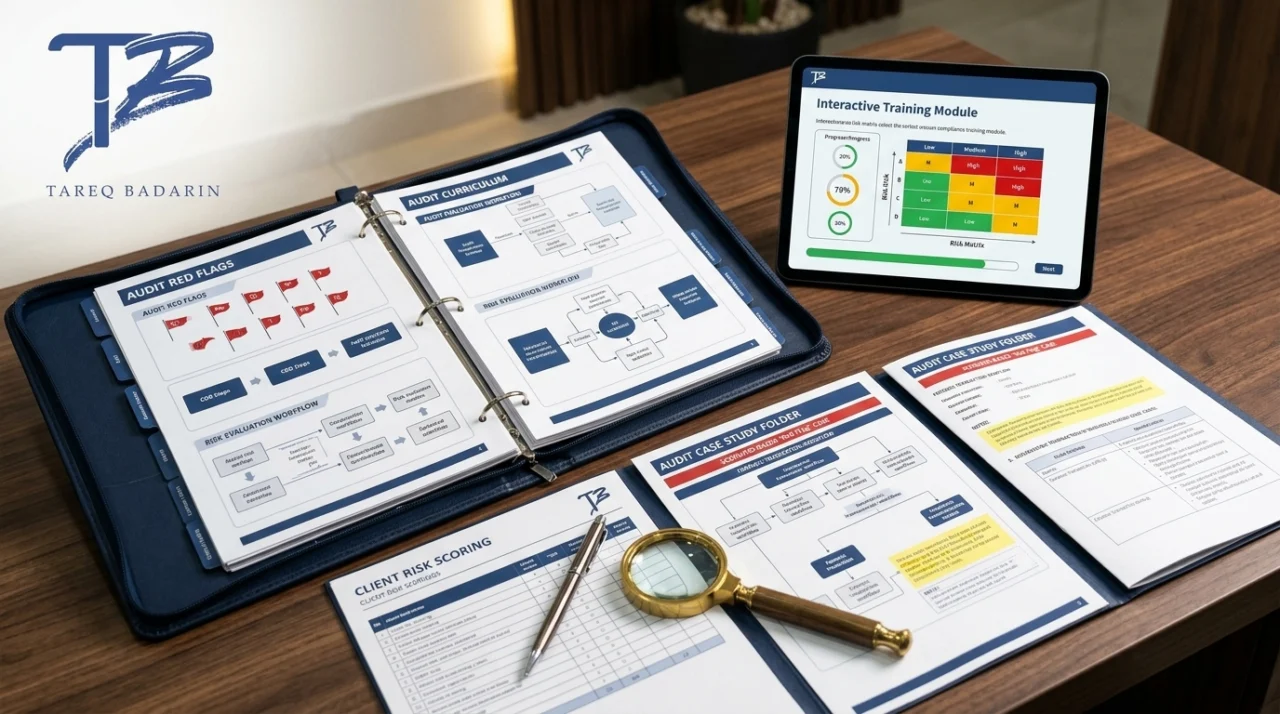
Quick Summary
Discover mandatory AML/CFT training requirements for auditors and accounting practices in the UAE under DNFBP rules. Learn key curriculum components and capacity-building strategies.
Auditors and accounting practices across the United Arab Emirates operate under heightened regulatory oversight. Classified as Designated Non-Financial Businesses and Professions (DNFBPs), accounting and auditing firms must establish robust defense mechanisms against money laundering, terrorist financing, and proliferation financing. A core pillars of regulatory compliance mandated by the Ministry of Economy and Ministry of Finance is implementing comprehensive, role-specific AML CFT training for auditors and accountants UAE professionals.
Financial crime techniques continuously adapt to complex corporate structures, legal entity creation, and cross-border transactions. As gatekeepers to the financial system, audit professionals and professional accountants must possess technical expertise to spot red flags, execute thorough Customer Due Diligence (CDD), perform risk assessments, and fulfill statutory reporting obligations via the goAML portal. Mandatory AML training requirements for UAE auditors are a fundamental regulatory obligation necessary to maintain firm licensing and protect against severe administrative penalties.
The DNFBP Regulatory Landscape for UAE Accounting Sector
In the UAE regulatory framework, accounting and auditing entities provide specialized services that can inadvertently be exploited for illicit financial flows. Services such as structuring corporate acquisitions, managing client accounts, creating trusts or companies, and providing tax advisory fall directly under statutory Anti-Money Laundering and Countering the Financing of Terrorism (AML/CFT) rules, reinforced by Federal Decree-Law No. 10 of 2025.
Why Auditors and Accountants Are Classified as Gatekeepers
Financial criminals often seek legitimacy by leveraging the credibility of professional accounting and auditing firms. By utilizing auditing services or engaging accountants to execute financial transfers and facilitate corporate transactions, bad actors attempt to obscure the illicit origin of funds. Consequently, regulatory authorities mandate that accounting firms act as gatekeepers, enforcing strict screening, risk assessment, and continuous transaction monitoring.
Failure to implement effective auditor anti money laundering capacity building UAE frameworks exposes firms to significant regulatory sanctions, legal exposure, administrative fines, and severe reputational damage. DNFBP compliance requires systematic risk mitigation embedded directly into firm engagement workflows.
Mandatory AML/CFT Training Requirements for UAE Auditors
Under federal regulations, providing generic compliance overview sessions is insufficient. Compliance training programs must be tailored, systematically documented, updated annually, and delivered to all relevant operational and leadership staff. AML compliance training for accounting firms Dubai and broader UAE practices must address specific professional operational realities.
Key Statutory Training Mandates
- Universal Coverage: All professional staff—including senior partners, audit managers, junior accountants, corporate service specialists, and compliance officers—must undergo structured AML/CFT training tailored to their operational responsibilities.
- New Hire Onboarding: Newly onboarded audit and accounting personnel must complete basic AML/CFT induction before managing client engagements or handling corporate records.
- Annual Refresher Programs: Regulatory frameworks mandate periodic refresher courses to update teams on changing sanctions lists, emerging money laundering typologies, and updated regulatory directives.
- Verifiable Documentation: Accounting firms are legally required to maintain detailed records of training delivery, attendance logs, evaluation scores, and course materials for regulatory inspection during supervisory audits.
Core Curriculum Elements for Accounting Practice AML/CFT Capacity Building
An effective AML CFT curriculum for accounting practices Dubai and UAE wide must balance theoretical legal compliance with practical operational application. Generic financial institution training modules frequently fail to cover specific accounting and auditing risk indicators.
| Curriculum Module | Target Focus Area | Practical Application for Auditors |
|---|---|---|
| Legal & Regulatory Foundations | Federal Decree-Law No. 10 of 2025, Cabinet Decisions, & DNFBP Guidelines | Understanding personal and corporate liability, regulatory inspection expectations, and statutory duties. |
| Risk Assessment Methodology | Enterprise-Wide Risk Assessment (EWRA) & Engagement Risk | Scoring client risk based on geographic exposure, entity structure, service type, and delivery channels. |
| KYC, CDD & Ultimate Beneficial Ownership (UBO) | Identification, Verification, & Complex Corporate Structures | Unraveling multi-layered offshore ownership, verifying real control, and conducting Enhanced Due Diligence (EDD). |
| Red Flag Detection & Typologies | Sector-Specific Suspicious Indicators | Spotting unusual audit adjustments, unexplained third-party payments, and back-to-back loan structures. |
| goAML Reporting Protocols | SAR, STR, & PNI Filings | Drafting legally sound Suspicious Activity Reports (SARs) and Suspicious Transaction Reports (STRs) without tipping off clients. |
| Targeted Financial Sanctions (TFS) | UN, Local Terrorist Lists, & Real-Time Screening | Integrating automated daily sanctions screening across existing client databases and prospective engagements. |
Understanding Red Flags in Auditing and Accounting Engagements
Auditors must be trained to identify specific red flags during standard engagements. Common financial crime indicators within the accounting sector include:
- Clients reluctant to provide comprehensive UBO documentation or explaining complex corporate ownership structures without clear economic rationale.
- Audit requests involving transactions with high-risk jurisdictions subject to increased FATF monitoring or trade restrictions.
- Unexplained payments from unrelated third parties to settle professional accounting or audit fees.
- Overly complex transactions, rapid movement of funds between corporate accounts without logical operational necessity, or sudden reliance on cash-equivalent assets.
- Clients requesting services outside their stated business scope or urging expedited completion without standard verification procedures.
Step-by-Step Implementation Strategy for Accounting Firms
Building a robust DNFBP AML compliance training accounting sector UAE program requires a structured framework aligned with regulatory expectations and internal risk profiles.
Step 1: Conduct a Training Needs Analysis (TNA)
Assess existing staff knowledge across different departments. Audit teams require deep technical training on forensic indicators, while client onboarding staff require intensive training on KYC collection, source of wealth (SoW) verification, and primary sanctions screening.
Step 2: Develop a Sector-Specific Curriculum
Ensure course content reflects actual audit scenarios, local regulatory directives, and goAML reporting mechanisms. Avoid reliance on non-jurisdictional standard modules that omit UAE legal nuances and specific DNFBP obligations.
Step 3: Deploy Interactive and Scenario-Based Learning
Effective counter terrorism financing course auditors UAE modules utilize practical case studies. Training should guide teams through complex ownership chart analysis, evaluating suspicious ledger entries, and drafting clear internal escalation reports to the Money Laundering Reporting Officer (MLRO).
Step 4: Establish Testing, Verification, and Record-Keeping
Implement post-training evaluations to ensure comprehension. Store training certificates, test results, updated curriculum logs, and sign-in sheets within a centralized compliance archive accessible during Ministry audits.
How Tareq Badarin Delivers Specialized AML/CFT Training
Navigating evolving regulatory requirements demands practical, expert-led instruction tailored specifically to accounting firms, auditors, and corporate service providers. Tareq Badarin, operating within Farahat & Co., provides structured advisory and customized capacity-building programs designed for UAE DNFBPs.
Equipped with CAMS, ICA, and PMP credentials, Tareq Badarin delivers tailored training solutions covering Enterprise-Wide Risk Assessments, goAML filing protocols, UBO verification techniques, and TFS screening workflows. Training programs are crafted to meet regulatory scrutiny while strengthening operational efficiency.
Take Action to Secure Your Practice Compliance
Ensure your accounting or auditing practice remains fully compliant with UAE regulatory standards. Contact Tareq Badarin today to schedule a tailored AML/CFT capacity-building consultation and review your firm’s compliance training framework.
Operationalizing Compliance: Developing Internal Escalation Protocols and goAML Workflow Controls
While establishing a comprehensive training curriculum fulfills a fundamental statutory requirement, translating theoretical regulatory knowledge into operational compliance requires structured internal escalation procedures. When audit staff or account managers identify suspicious financial activities or unexplainable corporate transactions, a clear internal pathway ensures information flows swiftly to the Money Laundering Reporting Officer (MLRO) without exposing the firm to tipping-off risks or reporting delays.
Structuring the Internal Suspicious Activity Reporting Pipeline
An effective internal escalation framework bridges the gap between everyday audit field activities and regulatory reporting obligations under the goAML platform. Firms must establish documented operational controls that dictate exactly how an engagement team member handles red flags encountered during routine bookkeeping, tax advisory, or financial statement audits.
- Initial Field Escalation: Audit team members who observe suspicious ledger entries, unverified third-party fee settlements, or uncooperative UBO disclosures must complete an Internal Suspicious Activity Report (ISAR) form. This document must detail the objective facts, transaction identifiers, relevant account figures, and specific red flags identified during field testing.
- Objective MLRO Review: Upon receiving an ISAR, the designated MLRO or compliance delegate must independently evaluate the findings against the client’s broader enterprise risk profile, historical transaction patterns, and supplementary Customer Due Diligence (CDD) data. The MLRO evaluates whether the activity warrants a formal filing or requires additional internal inquiries.
- Information Barrier Controls: To prevent tipping off client representatives or unauthorized internal personnel, firms must restrict access to ISAR logs and goAML case files. Access controls within engagement software and internal servers must isolate compliance reviews from general audit project folders.
Operational Workflow for goAML Reporting Protocols
The transition from an internal red flag detection to an external regulatory disclosure demands meticulous documentation. The following table outlines the practical workflow steps required when processing suspicious findings within an accounting or audit practice:
| Workflow Phase | Operational Action Item | Responsible Party | Governance Output |
|---|---|---|---|
| 1. Flag Identification | Document unexplained transactional anomalies or verification gaps during audit testing. | Senior Auditor / Engagement Lead | Detailed ISAR Submission Form |
| 2. Pre-Filing Assessment | Review client profile, source of funds evidence, and historical engagement data. | MLRO / Compliance Officer | Internal Evaluation Assessment |
| 3. External Registration & Filing | Draft and submit Suspicious Activity Report (SAR) or Suspicious Transaction Report (STR) via goAML. | Designated MLRO | goAML System Confirmation Record |
| 4. Post-Reporting File Management | Apply enhanced monitoring controls or initiate formal client exit strategies safely. | Managing Partner & MLRO | Client File Memo & Audit Log |
Mitigating Tipping-Off Risks and Managing Client Interactions
A critical operational control within mandatory AML compliance training for accounting firms Dubai and broader UAE practices is training staff to navigate sensitive client interactions following the identification of suspicious activities. Article 17 of Federal Decree-Law No. 10 of 2018 strictly prohibits disclosing any information regarding an ongoing internal evaluation, an active goAML report, or an official financial intelligence inquiry.
Audit engagement teams must be trained on standardized protocols when requesting supplementary CDD information, clarification on transaction source of wealth, or supporting corporate documents. If a client exhibits hostility, evasiveness, or undue pressure to expedite an engagement, staff must follow established communication scripts that deflect suspicion away from compliance monitoring. Engagement teams must never inform a client that an audit delay is caused by an MLRO review or goAML filing preparation. When information requests remain unfulfilled, the firm must follow clear protocols for engagement suspension or withdrawal in consultation with legal and compliance leadership.
Establishing Ongoing Quality Assurance and Training Audit Logs
To demonstrate compliance during supervisory inspections, accounting practices must implement quality assurance mechanisms that monitor the effectiveness of their internal escalation workflows. Supervisory authorities evaluate not only whether a firm possesses a written policy, but whether operational staff actively understand and execute these procedures.
- Periodic Escalation Testing: Compliance teams should conduct periodic, anonymized test scenarios to evaluate how quickly audit staff identify sample red flags and initiate internal escalation forms.
- Audit Log Maintenance: Maintain a centralized, secure compliance archive containing dated ISAR logs, MLRO determination rationales for non-filed internal reports, goAML submission confirmations, and annual escalation policy updates.
- Feedback Loops into Training Curricula: Insights gained from internal red flag escalations and regulatory updates must be continually fed back into the firm’s annual AML CFT curriculum for accounting practices Dubai, ensuring training content reflects actual operational challenges encountered by audit teams.
Governance Framework: Compliance Audit Trails and Regulatory Inspection Readiness for UAE Accounting Practices
Establishing a comprehensive curriculum and internal reporting mechanism fulfills core legal obligations, but long-term regulatory resilience requires a robust governance framework. For accounting practices, audit firms, and corporate service providers operating in the UAE, maintaining continuous inspection readiness is essential. The Ministry of Economy and local supervisory authorities actively examine whether designated non-financial businesses and professions (DNFBPs) maintain verifiable evidence of compliance effectiveness. A structured governance model ensures that every aspect of mandatory AML training requirements for UAE auditors directly translates into demonstrable regulatory adherence during formal supervisory reviews.
Structuring Verifiable Training Documentation and Compliance Logs
Demonstrating compliance during regulatory audits relies on maintaining complete, unalterable documentation. Supervisory authorities evaluate whether dnfbp aml compliance training accounting sector UAE initiatives are systematically administered, tracked, and updated. Accounting firms must implement centralized compliance repositories that record every training activity across all operational levels.
- Attendance and Participation Records: Secure digital sign-in sheets, time-stamped learning management system (LMS) logs, and signed attendance declarations for every partner, senior auditor, junior accountant, and administrative staff member.
- Curriculum Version Control: Comprehensive archives of historical training modules, presentation slides, case study materials, and practical exercises. These records must document specific updates made to address local statutory changes, such as amendments to Cabinet Decision No. (10) of 2019 or new goAML platform directives.
- Comprehension and Competency Metrics: Pre- and post-training assessment scores, individual evaluation results, and remediation records for personnel who initially failed to meet required passing thresholds.
- Instructor Credentials and Syllabus Alignment: Formal records establishing the qualifications of internal compliance trainers or external advisors delivering auditor anti money laundering capacity building UAE sessions, alongside mapped syllabi showing coverage of targeted risks.
Developing an Inspection Readiness Decision Framework
When supervisory authorities request an on-site inspection or off-site desk audit, firms must rapidly produce coherent proof of compliance. Implementing a standardized readiness framework allows managing partners and compliance officers to organize compliance records efficiently, minimizing operational disruption during regulatory inquiries.
| Inspection Area | Required Documentation | Operational Verification Focus | Responsible Role |
|---|---|---|---|
| Training Policy & Scope | Annual training plan, board-approved AML/CFT policy, partner sign-offs. | Verifying 100% staff coverage, including new hires onboarded within the last 90 days. | Compliance Officer / MLRO |
| Curriculum Relevance | Sector-specific training content, counter terrorism financing course auditors UAE case studies. | Evaluating whether training addresses accounting-specific red flags and local goAML requirements. | Senior Audit Partner |
| Competency Testing | Test results, retake logs, practical exercise evaluation sheets. | Assessing whether staff demonstrate practical understanding of red flag identification and escalation. | Quality Assurance Lead |
| Record Retention | Centralized digital compliance logs spanning a minimum five-year retention window. | Ensuring instant retrieval and data integrity of historical training and ISAR logs. | IT / Compliance Archive Manager |
Integrating Independent Audits of the AML Training Function
To ensure training programs remain effective and aligned with evolving financial crime risks, accounting firms must subject their AML CFT training for auditors and accountants UAE framework to independent testing. An objective review evaluates whether the curriculum adequately reflects the firm’s specific risk profile, such as handling high-risk corporate structures, cross-border engagements, or complex tax advisory services. Independent reviews should assess training frequency, evaluate staff retention of critical red flag indicators, and verify that the MLRO regularly updates training scenarios based on real-world internal escalation data. By embedding independent evaluations into the annual compliance plan, accounting practices ensure their compliance posture remains resilient, auditable, and fully compliant with UAE regulatory expectations.
Frequently Asked Questions
Is AML CFT training legally mandatory for accounting and auditing firms in the UAE?
Yes. Under UAE federal AML laws and DNFBP regulations, accounting practices, independent auditors, and corporate service providers are required to implement mandatory, role-specific AML/CFT training programs for all relevant staff.
How often must auditors undergo AML compliance training in Dubai and the UAE?
Compliance training must be conducted at least annually for existing staff, with immediate induction training provided for all new hires before they handle client engagements or compliance-sensitive tasks.
What documentation must accounting firms maintain regarding AML training?
Firms must maintain documented training policies, employee attendance logs, completion certificates, assessment scores, and copies of presentation materials to demonstrate full compliance during Ministry of Economy or supervisory inspections.
How does tailored AML training for accountants differ from general financial institution training?
Accounting-specific training focuses on risks unique to professional services, including identifying complex legal structures, detecting manipulated financial reports, evaluating source of funds during company incorporation, and managing goAML reporting for non-financial professions.
