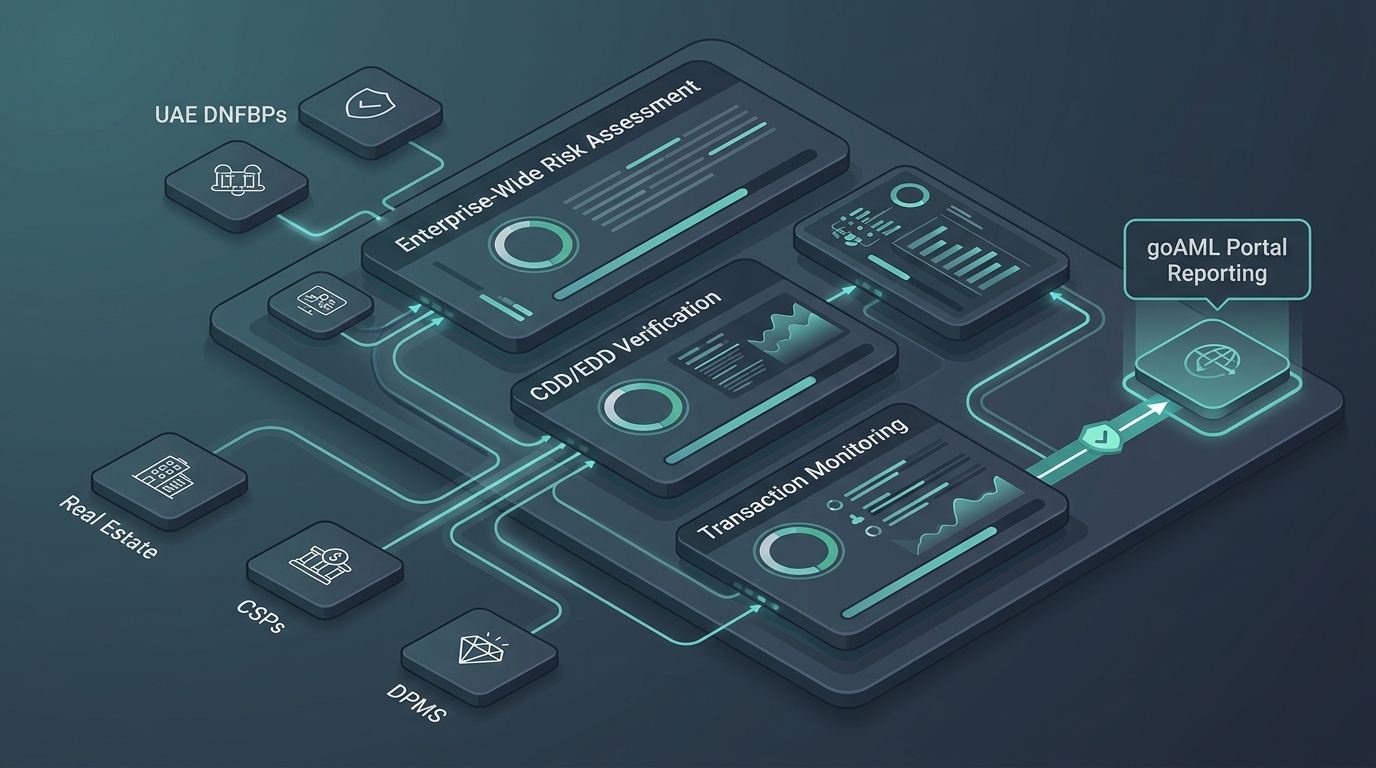

Dubai has firmly established itself as a premier global financial and commercial hub. However, this rapid economic expansion and high volume of cross-border transactions attract sophisticated financial crime risks. To preserve the integrity of its financial system, the United Arab Emirates (UAE) has enacted some of the world’s most stringent anti-money laundering (AML) and countering the financing of terrorism (CFT) regulations. For businesses operating in this dynamic environment, compliance is no longer a mere administrative checkbox; it is a core strategic imperative.
Navigating this complex regulatory landscape requires specialized expertise. Professional AML advisory services Dubai provide the critical guidance, technical systems, and risk management frameworks necessary to protect your business from severe penalties, reputational damage, and operational disruptions. Whether you are a Designated Non-Financial Business or Profession (DNFBP), a corporate service provider, a real estate firm, or a licensed financial institution, establishing a resilient compliance posture is essential for long-term success.
The Evolving AML Regulatory Landscape in Dubai
The UAE’s commitment to combating financial crime is reflected in its robust legislative framework. The primary legislation governing these activities is Federal Decree-Law No. 20 of 2018 on Anti-Money Laundering and Combating the Financing of Terrorism and Financing of Illegal Organisations, supplemented by subsequent executive regulations and amendments, including Federal Decree-Law No. 10 of 2025. These laws align the UAE with the international standards set by the Financial Action Task Force (FATF).
Regulatory oversight is distributed across several key authorities, each enforcing strict compliance within their respective jurisdictions:
- The Ministry of Economy (MoE): Supervises DNFBPs, including real estate brokers, precious metal dealers, auditors, and corporate service providers.
- The Central Bank of the UAE (CBUAE): Oversees banks, exchange houses, and other licensed financial institutions.
- The Dubai Financial Services Authority (DFSA): Regulates firms operating within the Dubai International Financial Centre (DIFC).
- The Executive Office for Control and Non-Proliferation (EOCN): Manages the implementation of Targeted Financial Sanctions (TFS) and proliferation financing controls.
Failure to comply with the directives of these bodies can result in catastrophic consequences, including multi-million dirham fines, suspension of business licenses, and criminal prosecution of key executives. Engaging professional AML advisory services in Dubai ensures your organization remains fully aligned with these evolving regulatory expectations.
Key Regulatory Updates and Enforcement Trends
In recent years, UAE regulatory bodies have significantly stepped up their enforcement actions. Inspections are no longer purely desk-based; onsite inspections have become highly rigorous, focusing on the practical application of policies rather than just the existence of a compliance manual. The Ministry of Economy and the CBUAE regularly publish notices of administrative fines levied against non-compliant entities. Common triggers for these penalties include failure to register on the goAML portal, inadequate customer due diligence, and the absence of an independent AML audit. This heightened enforcement environment makes proactive advisory services indispensable.
Who Needs AML Advisory Services in Dubai?
While all businesses must avoid facilitating illicit financial flows, specific sectors are legally mandated to establish comprehensive AML/CFT programs. These sectors are broadly categorized into Financial Institutions and Designated Non-Financial Businesses and Professions (DNFBPs).
1. Real Estate Firms and Developers
Dubai’s real estate sector is a primary driver of the local economy, making it a key target for money laundering activities. Real estate agents, brokers, and developers must comply with strict reporting requirements, particularly concerning high-value cash transactions, virtual asset payments, or funds derived from rapid property flipping. Compliance officers must verify the source of funds and report suspicious activities via the goAML portal.
Specifically, real estate professionals must submit Real Estate Activity Reports (REARs) for transactions involving physical cash equal to or exceeding AED 55,000, or where virtual assets are used as a payment method for any portion of the transaction. This requires a deep understanding of payment structures and immediate reporting capabilities.
2. Corporate Service Providers (CSPs) and Trust Services
CSPs assist foreign investors in setting up corporate structures, managing bank accounts, and providing nominee services. Because these structures can potentially be misused to obscure ultimate beneficial ownership (UBO), CSPs face intense regulatory scrutiny. They require robust Know Your Customer (KYC) and Customer Due Diligence (CDD) protocols to identify the natural persons behind corporate entities.
The challenge for CSPs lies in unraveling complex, multi-layered corporate structures that span multiple offshore jurisdictions. Professional AML advisory services help CSPs establish clear verification paths to identify the true natural persons holding ultimate control, ensuring compliance with Cabinet Decision No. 109 of 2023 on the Regulation of Beneficial Owner Procedures.
3. Precious Metals and Stone Dealers (DPMS)
The gold and diamond trade in Dubai is highly active. Dealers in precious metals and stones must implement rigorous transaction monitoring and customer identification measures, especially when transactions exceed the statutory cash thresholds established by the Ministry of Economy.
For DPMS, any cash transaction equal to or exceeding AED 55,000 triggers mandatory customer identification and reporting requirements. Advisors assist these businesses in implementing point-of-sale compliance checks that do not disrupt legitimate retail operations while fully satisfying regulatory mandates.
4. Legal Consultants, Auditors, and Accountants
Independent professionals who prepare or execute transactions for clients regarding the purchase of real estate, management of funds, or creation of corporate entities are classified as DNFBPs. They must maintain strict independence and report any red flags encountered during their professional engagements.
These professionals often struggle with balancing client confidentiality and their statutory reporting duties under UAE AML law. Expert advisory services provide the legal and regulatory clarity needed to navigate these complex scenarios safely.
Core Components of an Effective AML Compliance Framework
A generic, off-the-shelf compliance manual is insufficient to satisfy UAE regulators. An effective AML framework must be tailored to the specific risk profile, scale, and operational nature of your business. Professional AML advisory services in Dubai focus on building and optimizing several core pillars:
1. Enterprise-Wide Risk Assessment (EWRA)
The foundation of any compliant AML program is the Enterprise-Wide Risk Assessment. This process involves identifying, assessing, and understanding the specific money laundering and terrorism financing risks to which your business is exposed. An EWRA evaluates risks across several categories:
| Risk Category | Key Assessment Factors | Mitigation Strategy |
|---|---|---|
| Customer Risk | High-net-worth individuals, PEPs, non-resident clients, complex corporate structures. | Enhanced Due Diligence (EDD), source of wealth verification. |
| Geographic Risk | Clients or transactions originating from high-risk jurisdictions or sanctioned countries. | Geographic restrictions, enhanced transaction monitoring. |
| Product/Service Risk | Cash-intensive services, anonymous transactions, virtual asset integration. | Transaction limits, strict UBO identification. |
| Delivery Channel Risk | Non-face-to-face onboarding, third-party intermediaries, online platforms. | Digital identity verification, multi-factor authentication, audit trails. |
An effective EWRA must be updated at least annually, or immediately upon significant changes to the business model, such as launching a new product line or expanding into new geographic markets. Regulators expect to see a clear methodology that links identified risks directly to the controls implemented by the firm.
2. Customer Due Diligence (CDD) and Enhanced Due Diligence (EDD)
Knowing exactly who you are doing business with is a fundamental legal requirement. AML advisory services help businesses design and implement multi-tiered customer onboarding workflows:
- Simplified Due Diligence (SDD): Applied to low-risk customers where the risk of money laundering is demonstrably negligible. This cannot be applied if there is any suspicion of money laundering or if specific high-risk indicators are present.
- Standard Customer Due Diligence (CDD): Involves identifying the customer, verifying their identity using independent source documents (such as a valid passport and Emirates ID), and identifying the Ultimate Beneficial Owner (UBO) holding 25% or more of the entity’s shares or voting rights.
- Enhanced Due Diligence (EDD): Mandated for high-risk customers, including Politically Exposed Persons (PEPs), family members of PEPs, and entities established in high-risk jurisdictions. EDD requires obtaining additional information regarding the source of wealth, source of funds, and the purpose of the business relationship, alongside senior management approval.
Advisors help establish clear, step-by-step standard operating procedures (SOPs) for compliance teams, ensuring that staff know exactly what documents to request and how to verify their authenticity using reliable databases.
3. Transaction Monitoring and Sanctions Screening
Compliance does not end once a client is onboarded. Continuous transaction monitoring is required to detect unusual patterns of activity that deviate from a customer’s established profile. Furthermore, businesses must conduct real-time sanctions screening against local and international watchlists, including the UAE Local Terrorist List and the United Nations Security Council Consolidated List, to ensure compliance with Targeted Financial Sanctions (TFS).
Sanctions screening must be performed at the time of onboarding, onboarding updates, and in real-time before executing any transaction. Advisory services assist in calibrating screening software to reduce false positives while ensuring that no sanctioned individual or entity bypasses the system.
4. The goAML Portal Integration and Reporting
The goAML portal, developed by the United Nations Office on Drugs and Crime (UNODC) and managed by the UAE Financial Intelligence Unit (FIU), is the central platform for reporting suspicious activities. Businesses must register on the goAML portal and actively submit:
- Suspicious Transaction Reports (STRs): Filed when there are reasonable grounds to suspect that funds are the proceeds of a crime or are linked to terrorism financing.
- Suspicious Activity Reports (SARs): Filed when a transaction or attempted transaction raises red flags, even if a specific monetary value cannot be determined.
- High-Risk Country Reports (HRCs) & High-Risk Country Activity Reports (HRACs): Filed for transactions involving jurisdictions identified as high-risk by the FATF or national authorities.
- Fund Transfer Reports (FTRs): Filed for specific electronic fund transfers that meet regulatory reporting thresholds.
Failing to register on the goAML portal or failing to report suspicious activity in a timely manner is one of the most common reasons for severe administrative penalties in the UAE. Professional advisors guide businesses through the registration process and establish internal protocols for drafting and submitting high-quality reports that meet the standards of the FIU.
The Role of an AML Compliance Consultant in Dubai
Many businesses, particularly small-to-medium enterprises (SMEs) and DNFBPs, lack the internal resources or specialized knowledge to manage these complex requirements independently. Partnering with an experienced AML compliance consultant in Dubai provides several distinct advantages:
Customized Policy Formulation
A consultant drafts bespoke AML/CFT policies, procedures, and controls that reflect your actual business operations while satisfying all regulatory mandates. This ensures your compliance manual is a practical, working document rather than a static file on a shelf. The policies must detail the roles and responsibilities of the Compliance Officer and the Money Laundering Reporting Officer (MLRO), the frequency of reviews, and the escalation paths for suspicious activities.
Independent AML Audits
Regulators frequently require businesses to undergo independent AML audits to test the effectiveness of their compliance programs. An external consultant conducts a thorough, unbiased review of your systems, identifies gaps, and provides actionable remediation plans before official regulatory inspections occur. This audit covers governance, risk assessment methodologies, customer files, transaction monitoring records, and staff training logs.
Staff Training and Capacity Building
A compliance program is only as strong as the employees who execute it. AML advisory services include structured training programs for your staff, ensuring they can recognize red flags, understand their reporting obligations, and utilize compliance tools effectively. Training must be tailored to different roles within the organization, with specialized sessions for front-line sales staff, compliance teams, and senior management.
Technology Selection and Optimization
From automated KYC onboarding software to transaction monitoring systems and sanctions screening tools, consultants help you select, configure, and calibrate the right technology stack to minimize false positives and streamline compliance workflows. This ensures that your technology investment is aligned with your actual risk appetite and operational scale.
Step-by-Step Guide to Implementing a Compliant AML Program
For businesses looking to establish or upgrade their AML compliance framework in Dubai, a structured approach is essential. Below is a practical roadmap designed by compliance experts:
Step 1: Appoint a Qualified Compliance Officer / MLRO
The first step is to appoint an individual with the appropriate qualifications and experience to act as the Compliance Officer and MLRO. This individual must be approved by the relevant regulatory authority (such as the Ministry of Economy or DFSA) and must possess a deep understanding of UAE AML laws.
Step 2: Register on the goAML and SACM Portals
Register your entity on the goAML portal managed by the Financial Intelligence Unit. Additionally, register on the Sanctions Application Committee Portal (SACM) to receive real-time updates regarding changes to local and international sanctions lists. Ensure that notifications are actively monitored.
Step 3: Conduct the Enterprise-Wide Risk Assessment
Analyze your business model to identify potential vulnerabilities. Document your findings in a formal EWRA report, detailing how your business plans to mitigate each identified risk. This document must be approved by your board of directors or senior management.
Step 4: Draft and Implement AML/CFT Policies
Develop a comprehensive AML/CFT manual that outlines your internal controls, customer onboarding procedures, transaction monitoring protocols, and reporting workflows. Ensure this manual is easily accessible to all relevant staff members.
Step 5: Deploy Screening and Monitoring Technology
Implement reliable software solutions for customer identification, PEP and sanctions screening, and transaction monitoring. Ensure these systems are properly integrated into your daily operational workflows and calibrated to minimize operational friction.
Step 6: Train Your Staff
Conduct regular, documented training sessions for all employees. Ensure they understand how to identify red flags, such as clients who provide vague information, unusual transaction patterns, or requests to split transactions to avoid reporting thresholds.
Step 7: Schedule an Independent Audit
Engage an external AML consultant to conduct an independent audit of your compliance framework. Use the audit findings to remediate any weaknesses and continuously improve your compliance posture.
How Tareq Badarin Can Assist Your Business
As a dedicated AML Compliance Specialist operating within the professional framework of Farahat & Co. in Dubai, Tareq Badarin provides comprehensive, end-to-end AML, CTF, and risk management solutions. With deep expertise in the regulatory expectations of the Ministry of Economy, CBUAE, and DFSA, Tareq helps businesses establish resilient compliance frameworks that protect their operations and facilitate sustainable growth.
Our suite of professional AML advisory services includes:
- Regulatory Advisory & Consultation: Providing clear, actionable guidance on UAE AML laws, cabinet decisions, and regulatory updates.
- Enterprise-Wide Risk Assessments (EWRA): Designing robust risk methodologies to identify and mitigate institutional vulnerabilities.
- KYC & CDD Optimization: Streamlining customer onboarding processes to improve operational efficiency while maintaining strict compliance.
- Transaction Monitoring & Sanctions Screening: Implementing advanced screening protocols to ensure compliance with Targeted Financial Sanctions (TFS).
- Independent AML Compliance Audits: Conducting rigorous, independent evaluations of your existing compliance framework to prepare for regulatory inspections.
- goAML Registration & Reporting Support: Assisting with portal registration, system configuration, and the drafting of high-quality STRs and SARs.
By partnering with an experienced specialist, you can navigate the complexities of the UAE regulatory environment with confidence, allowing you to focus on your core business operations.
To secure your business and ensure full compliance with the latest UAE AML regulations, contact Tareq Badarin today for a professional consultation.
Frequently Asked Questions
What are DNFBPs in the UAE, and do they need AML advisory services?
Designated Non-Financial Businesses and Professions (DNFBPs) include real estate brokers, precious metal dealers, auditors, lawyers, and corporate service providers. They are legally required to establish robust AML frameworks, register on the goAML portal, and conduct regular risk assessments. Professional AML advisory services help DNFBPs design and maintain these complex compliance programs to avoid severe regulatory penalties.
What is the goAML portal, and how does my business register?
The goAML portal is an integrated software system developed by the UNODC and used by the UAE Financial Intelligence Unit (FIU) to collect, analyze, and distribute suspicious transaction reports. Registration is mandatory for all financial institutions and DNFBPs in the UAE. An AML consultant can guide you through the pre-registration and registration phases, ensuring your systems are properly configured to submit reports.
What is an Enterprise-Wide Risk Assessment (EWRA)?
An EWRA is a comprehensive evaluation process where a business identifies and assesses the specific money laundering and terrorism financing risks inherent to its operations. It analyzes risks related to customers, geographic locations, products, services, transactions, and delivery channels. Regulators require businesses to document and update this assessment regularly to demonstrate a risk-based approach to compliance.
What are the penalties for non-compliance with AML laws in Dubai?
Penalties for violating UAE AML/CFT regulations are severe. They include administrative fines ranging from AED 50,000 to several million dirhams, suspension or revocation of business licenses, public censuring, and criminal prosecution of compliance officers, board members, and senior management, which may result in imprisonment.